
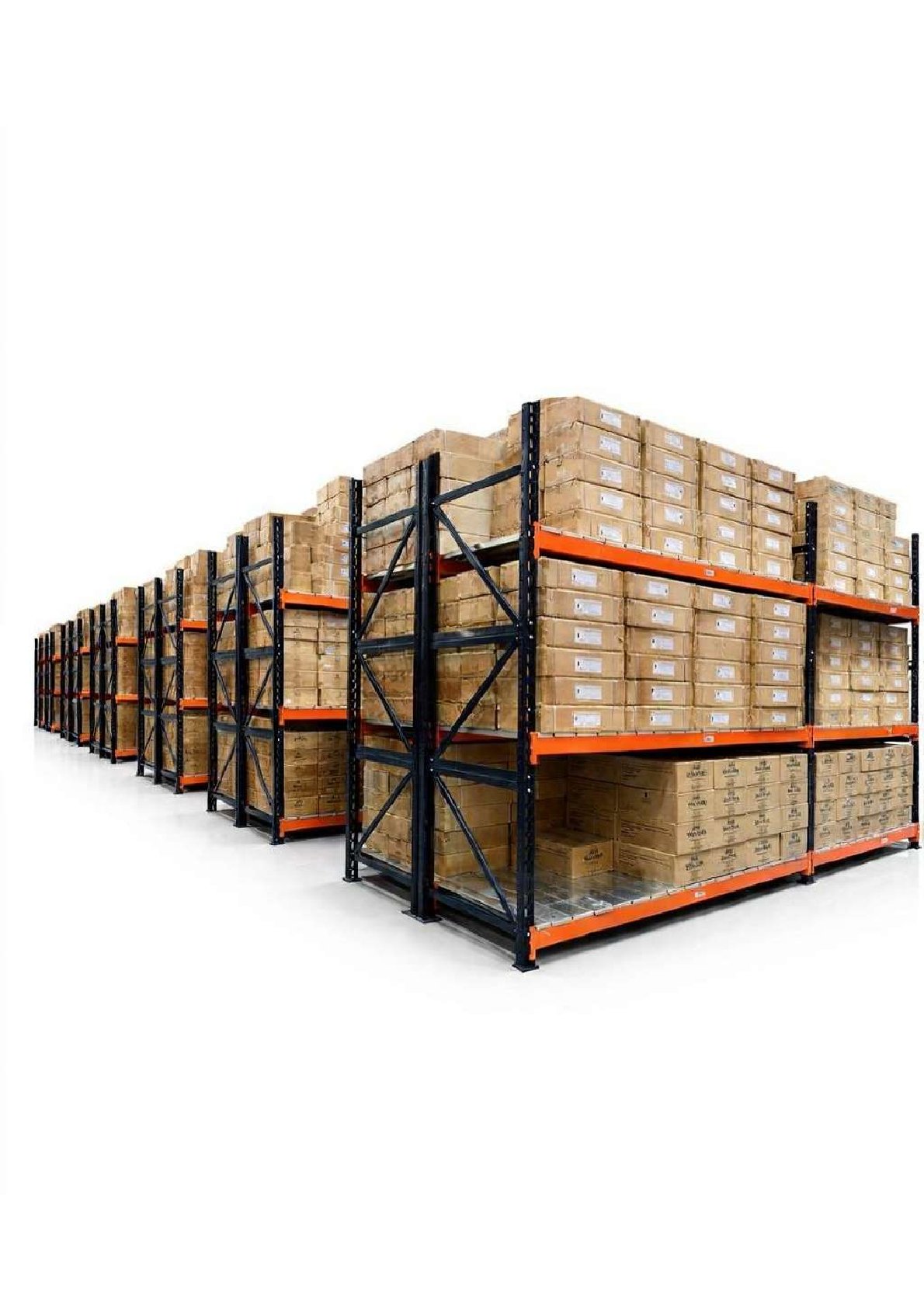
Rack overloading is one of the most under-reported safety risks in Indian warehouses, mostly because it rarely looks dramatic until something actually fails. A beam that's bowing slightly, an upright that's leaning a few degrees, a load chart that was never installed in the first place — none of these stop operations on their own, which is exactly why they go unnoticed until a failure forces the issue.
Understanding how load capacity is actually calculated, and what a proper load chart should tell you, is the difference between catching a risk early and finding out the hard way.
Quick Answer
A rack's load capacity is calculated from its steel section size and gauge, the beam span (bay width), the number of beam levels, the upright frame height, and how the load is distributed across each level — expressed as either a uniformly distributed load (UDL) rating or a maximum load per pallet position. It should always be engineered and certified for your specific configuration, never assumed from a catalogue figure for a "similar-looking" rack.
What Determines a Rack's Load Capacity
- Steel section size and gauge (thickness) of the uprights and beams
- Beam span — the bay width between upright frames
- Number of beam levels and the vertical spacing between them
- Upright frame height and bracing pattern
- Floor condition and base plate anchoring
- How the load is distributed across the level — evenly spread or concentrated at points
Uniformly Distributed Load vs. Point Load
A beam's rated capacity usually assumes a uniformly distributed load (UDL) — the total weight spread evenly across the full beam span, such as several boxes or a full pallet footprint. A point load — all the weight concentrated on a small section of the beam, like one heavy crate placed off-centre — stresses the beam very differently, and a beam rated for a UDL of 2,000 kg cannot safely take a 2,000 kg point load in the same spot.
This is the single most common misunderstanding we see on-site: a published capacity number gets treated as a flat limit, without checking whether it's rated for UDL or point loading, or how the actual stored item distributes its weight.
How to Read a Rack Load Chart or Capacity Label
A properly installed rack should carry a load capacity plate or notice that states, at minimum:
- Maximum UDL per beam level
- Maximum capacity per bay (the full upright-to-upright section)
- Maximum capacity per upright frame
- The configuration the rating applies to — beam height, number of levels, and bay width
Expert Insight
If your rack doesn't carry a visible load capacity plate, treat that as a safety gap to close, not a formality to skip — every system we install is fitted with one, specific to that exact configuration, not a generic figure copied from a catalogue.
A Simple Way to Estimate Your Load Requirement
Before ordering or reconfiguring racking, work through this sequence rather than guessing:
- Identify your heaviest unit load — the single heaviest pallet, box, or crate you'll store, not the average
- Multiply by the number of unit loads per level — how many pallets or boxes sit on one beam level at once
- Compare the total against the load chart's per-level UDL rating — not just the per-bay or per-upright figure
- Build in a safety margin — don't plan to load right up to the rated maximum as routine practice
Expert Insight
Capacity does not scale in a straightforward way if you change beam height, add a level, or widen a bay after installation. Any reconfiguration should be re-verified against the original engineering, not assumed to carry the same rating as before.
Warning Signs of Rack Overloading
- Visibly bowed or bent beams, even slightly, under load
- Uprights that appear to lean or tilt out of vertical alignment
- Beam connector locks that have popped out or disengaged
- Denting or movement at the base plate where the frame meets the floor
- Unusual creaking or popping noises during loading or unloading
Routine Rack Safety Inspection Checklist
- Confirm load capacity plates are present, legible, and match the current configuration
- Inspect uprights and beams for bending, denting, or corrosion
- Check that aisle clearance hasn't been encroached by stored goods
- Verify floor anchor bolts are still tight and the base plates haven't shifted
- Re-verify capacity after any change to beam height, bay width, or number of levels
Why Load Capacity Should Be Engineered, Not Assumed
Every pallet racking and heavy duty rack system we design at Smart Storage Creation is calculated against the steel section, bay width, and heaviest load your operation actually expects to store — with a load capacity plate fitted at installation, not a generic number lifted from a catalogue. If you're unsure whether your current racking is rated for what's sitting on it, a site inspection is the fastest way to find out before it becomes a safety incident.
Smart Storage Creation manufactures and installs heavy duty, pallet, and cantilever racking from our ISO 9001, ISO 14001, ISO 45001, and CMMI Level 5 certified facility in Vasai, Maharashtra, serving warehouses across Mumbai, Maharashtra, and Pan-India.
Frequently Asked Questions (FAQ)
Conclusion
Rack load capacity isn't a single number you can read off a brochure and apply everywhere — it depends on steel section, beam span, configuration, and how the load is actually distributed.
A visible, accurate load capacity plate and a routine inspection habit are the two cheapest safeguards against the kind of overloading that causes real failures, not just cosmetic wear.
Smart Storage Creation engineers load capacity into every rack we design, and can inspect and re-certify racking we didn't originally supply if you're unsure what it's actually rated for.