
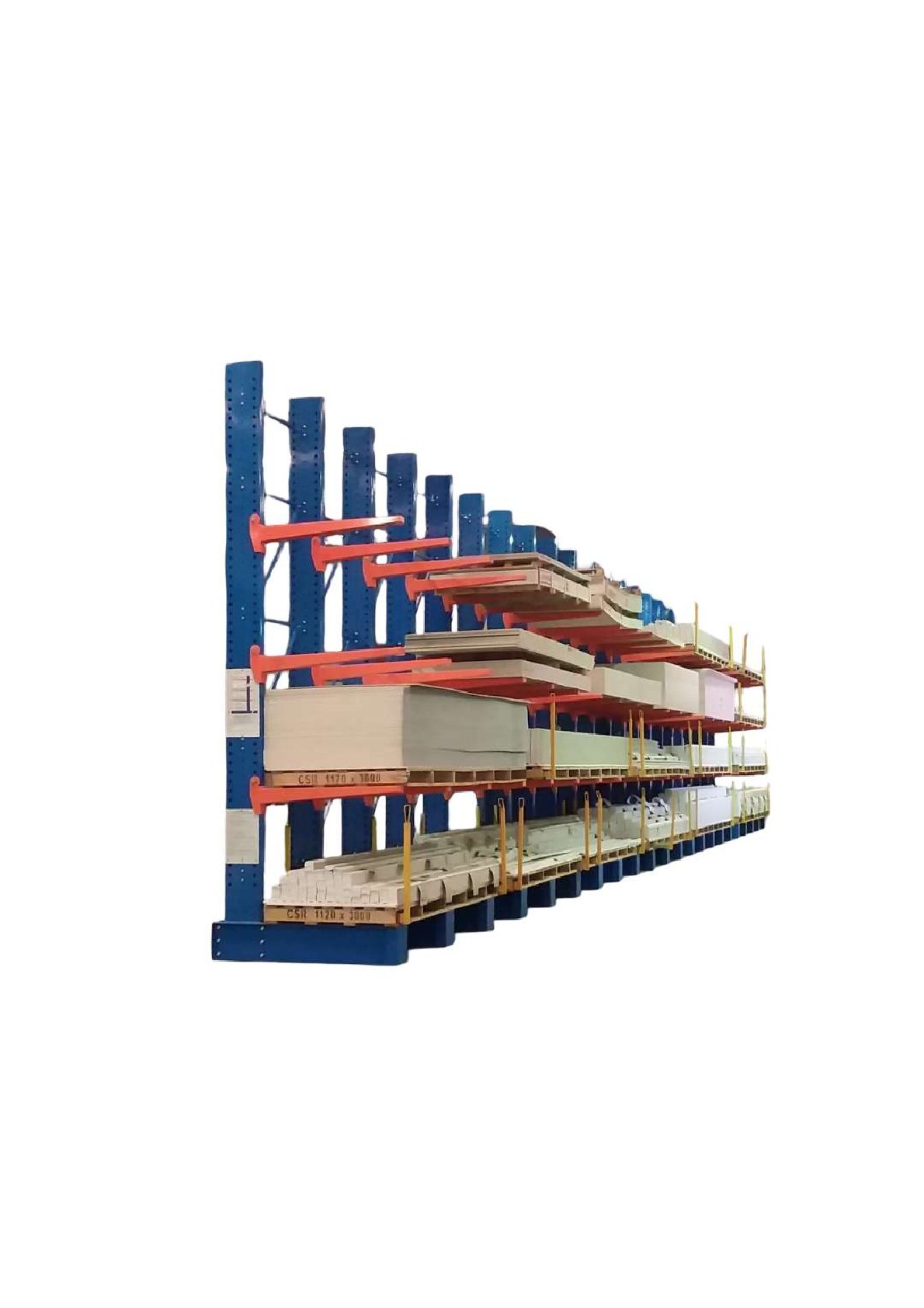
Long materials are some of the hardest items to store well. Pipes, tubes, steel bars, angles, channels, TMT bars, aluminium profiles and timber don't fit on shelves or in pallet racking, so they often end up stacked on the floor, leaning against walls or balanced across makeshift supports.
That approach wastes floor space, damages material, makes it hard to find the right size, and creates real safety risks — rolling pipes, collapsing stacks and back injuries from manual handling.
A cantilever rack for pipe storage solves all of these problems. This guide explains how cantilever racking works, how to size it correctly for your materials, and the layout and safety details that make the difference.
Quick Answer: Why Use a Cantilever Rack for Pipe Storage?
A cantilever rack stores pipes, steel bars and other long materials on horizontal arms that extend from vertical columns, with no front uprights blocking the storage face. This lets long items be loaded and retrieved from the side by forklift, side loader, crane or hand, without obstruction. To size one correctly, you need the material length and weight, the number of arms supporting each load, the load per arm and per column, the arm length (depth of the stack), the number of levels, and whether you need single-sided (against a wall) or double-sided (accessible from both sides) racking.
Why Pallet Racking and Floor Stacking Don't Work for Pipes
- Pallet racking has front uprights every bay — long pipes can't pass through without hitting them
- Floor stacking wastes the vertical space above the stack
- Bottom pipes in a stack get crushed, bent or corroded
- Finding a specific size means moving everything on top of it
- Loose stacks can roll or collapse, causing serious injuries
For the full comparison, see our guide on pallet racking vs. cantilever racking.
How a Cantilever Rack Works
- Columns — vertical steel uprights that carry the full load to the base
- Bases — horizontal members at the foot of each column that resist tipping
- Arms — horizontal supports fixed to the columns, adjustable in height, on which the material rests
- Bracing — connects columns into a stable run
- End stops — raised lips or pins at the end of each arm that stop round items rolling off
Because there are no front uprights, the length of the stored material is limited only by the length of the rack run, not by bay width.
Single-Sided vs. Double-Sided Cantilever Racks
Single-sided cantilever rack
Arms on one side only. Best placed against a wall or along the perimeter of the building or yard, where access is only possible from one side.
Double-sided cantilever rack
Arms on both sides of the columns, with a shared base. Best placed in the middle of a warehouse with an aisle on each side. It stores roughly twice as much material per run and can separate product types — for example, pipes on one side and steel bars on the other.
Rule of Thumb
Perimeter walls → single-sided. Centre of the floor with access from both sides → double-sided. Many facilities use both, with single-sided runs on the walls and double-sided runs in the middle.
How to Size a Cantilever Rack for Pipes and Steel Bars
Correct sizing is what separates a safe cantilever rack from a dangerous one. Work through these steps, or share the details with us during a site assessment.
Step 1: List your materials
Record the longest and shortest lengths, diameters or section sizes, and the weight per metre or per bundle of every material you'll store. The longest item decides the rack run length; the heaviest decides the load rating.
Step 2: Decide arm spacing and number of arms
Long materials must rest on enough arms to stop them sagging or bending between supports. Flexible items such as thin-walled pipes, tubes and profiles need arms placed closer together than rigid, heavy sections. The overhang at each end should also be kept limited, so the material doesn't droop or tip. As a general principle, the material should always rest on at least two arms — and on more for longer or more flexible lengths.
Step 3: Calculate load per arm
Divide the weight of the load on each level by the number of arms supporting it. Every arm must be rated for that load — with the weight distributed along the arm, not concentrated at the tip, which places much more stress on the arm and the column.
Step 4: Calculate load per column
Add up the loads on all the arms attached to one column (on both sides, for a double-sided rack). The column and base must be rated for the total. This is where many unengineered racks fail — the arms may hold, but the column bends.
Step 5: Choose arm length and number of levels
Arm length sets how deep each layer of material can be. Longer arms hold more but carry lower load ratings. The number of levels depends on the height of the material stack on each arm, the handling equipment's reach, and the building's clear height.
Expert Insight
The most common mistake we see is placing a heavy bundle at the very tip of a long arm. A cantilever arm's capacity assumes a distributed load; tip loading can exceed it even when the total weight looks well within the rating.
Arm Types and Accessories for Pipe Storage
- Straight arms — for flat, stable items like steel plates, boards and sections
- Inclined arms — slightly angled upwards so round items like pipes roll back towards the column
- End stops and locking pins — prevent pipes rolling off the arm tip
- Dividers — separate sizes or grades on the same level
- Protective arm pads — reduce scratching on coated or finished materials
Layout and Handling Equipment
Aisle width depends on how material is handled. Side loaders and multi-directional forklifts can move long loads lengthwise down narrow aisles. Counterbalance forklifts carrying long loads sideways need much wider aisles. Overhead cranes need clear access from above. Plan the cantilever layout around the equipment you'll actually use, and leave enough space at each end for long items to be turned and loaded.
Indoor and Outdoor Cantilever Racks
Steel bars, pipes and construction materials are often stored in open or semi-covered yards. Cantilever racks for these areas need a durable, corrosion-resistant powder-coated finish and proper anchoring. Indoor racks in warehouses can be designed for heights matched to the building and handling equipment.
Industries That Use Cantilever Racks for Long Materials
- Steel stockists, TMT bar and structural steel traders
- Pipe, tube and fittings distributors
- Aluminium extrusion and profile manufacturers
- Timber, plywood and laminate dealers
- Construction material and building supply yards
- Fabrication shops and engineering workshops
- Packing industries handling long rolls and boards
Cantilever Rack Safety Checklist
- Display the load rating per arm and per column on every rack run
- Load from the column outwards, never only at the arm tip
- Balance double-sided racks by loading both sides evenly where possible
- Use end stops or inclined arms for round items
- Anchor bases to the floor and check anchors regularly
- Inspect arms for bending and connectors for damage after any impact
Cantilever Rack Manufacturer in Mumbai and Across India
Smart Storage Creation designs and manufactures cantilever racking systems and heavy duty cantilever racks in single-sided and double-sided configurations, with adjustable arm levels, variable arm length and inclination, end stops and dividers, and a durable powder-coated finish. Every system is engineered for your materials and load per arm, from our ISO-certified facility in Vasai, Maharashtra.
If you also store palletised goods, our guide to types of pallet racking systems helps you plan the rest of the warehouse. Share your material list, lengths and weights, and we'll recommend the right cantilever configuration — contact us for a free site assessment and quote.
Frequently Asked Questions (FAQ)
Conclusion
A cantilever rack for pipe storage turns dangerous, space-wasting floor stacks into organised, accessible and safe storage for pipes, steel bars and other long materials.
Size it correctly by working out material lengths and weights, arm spacing, load per arm and load per column — and choose single-sided or double-sided runs to suit your layout.
Smart Storage Creation engineers cantilever racks for steel, pipe, timber and construction material storage across India, with load ratings matched to the materials you actually store.