
When a warehouse starts to feel full, the first instinct is to look for a bigger building or rent overflow space. Both are expensive, slow and disruptive. In most of the warehouses we visit, the real problem isn't a lack of space — it's space that isn't being used well.
Unused height above the racks, aisles wider than the forklift needs, beam levels set for pallets that are no longer stored, dead stock occupying prime locations — each one quietly reduces capacity. Fix a few of them and you can often delay a move by years.
Here's how to increase warehouse storage capacity without moving, starting with the quickest wins and working up to structural solutions.
Quick Answer: How Can I Increase Warehouse Storage Capacity?
To increase warehouse storage capacity without moving, start by measuring current utilisation, then use the building's vertical height with taller racking, reduce aisle widths to suit your forklifts, switch to higher-density racking such as double-deep or drive-in, add a mezzanine floor or two tier racks for hand-picked goods, use mobile compactors for records and small parts, store long items on cantilever racks, and re-slot inventory so fast movers and slow movers are in the right zones. Removing dead stock and right-sizing beam levels often unlocks space at almost no cost.
Step 0: Measure Before You Change Anything
You can't improve what you haven't measured. Before buying any new storage system, find out:
- Clear height — from floor to the lowest obstruction (roof beams, lights, sprinklers)
- Current racking height and how much space sits unused above it
- Aisle widths compared to what your forklifts actually need
- Pallet positions available vs. occupied, at peak and average
- SKU count, pallets per SKU and how often each SKU is picked
- Floor load capacity and condition
Expert Insight
A warehouse that looks full is often only full at floor level. When we measure cubic utilisation — floor area multiplied by usable height — many facilities are using well under half their real capacity.
1. Use Your Vertical Height
Floor space is expensive; air is free. If your racking stops well below the clear height, taller upright frames or additional beam levels can add significant pallet positions without using a single extra square foot. Check your forklift's maximum lift height and the floor's load capacity before going higher — taller racks put more weight on each base plate.
Heavy duty racks and pallet racking can be engineered for considerable heights when the building and handling equipment allow it.
2. Right-Size Your Beam Levels
Beam levels are often set when the racking is first installed and never changed, even when pallet heights change. If there's a large gap between the top of each pallet and the beam above, you're storing air. Adjusting beam heights to fit today's loads — with a safe clearance for forklift handling — can sometimes add a whole extra level to each bay.
Any change to beam levels must be checked against the rack's load rating. Our guide on how to calculate rack load capacity explains why.
3. Reduce Aisle Widths
Aisles can easily take up a large share of a warehouse floor. If your aisles were designed for counterbalance forklifts but you now use reach trucks — or they were simply laid out generously — narrowing them and adding rack rows is one of the most effective capacity gains available. Aisle width must always match the turning radius of the equipment that uses it.
4. Switch to Higher-Density Racking
If you store several pallets of the same SKU, standard selective racking wastes aisle space. Double-deep pallet racking stores roughly 40% more pallets per aisle, and drive-in pallet racking removes most aisles entirely for bulk single-SKU storage. Our guide to the types of pallet racking systems explains how to choose.
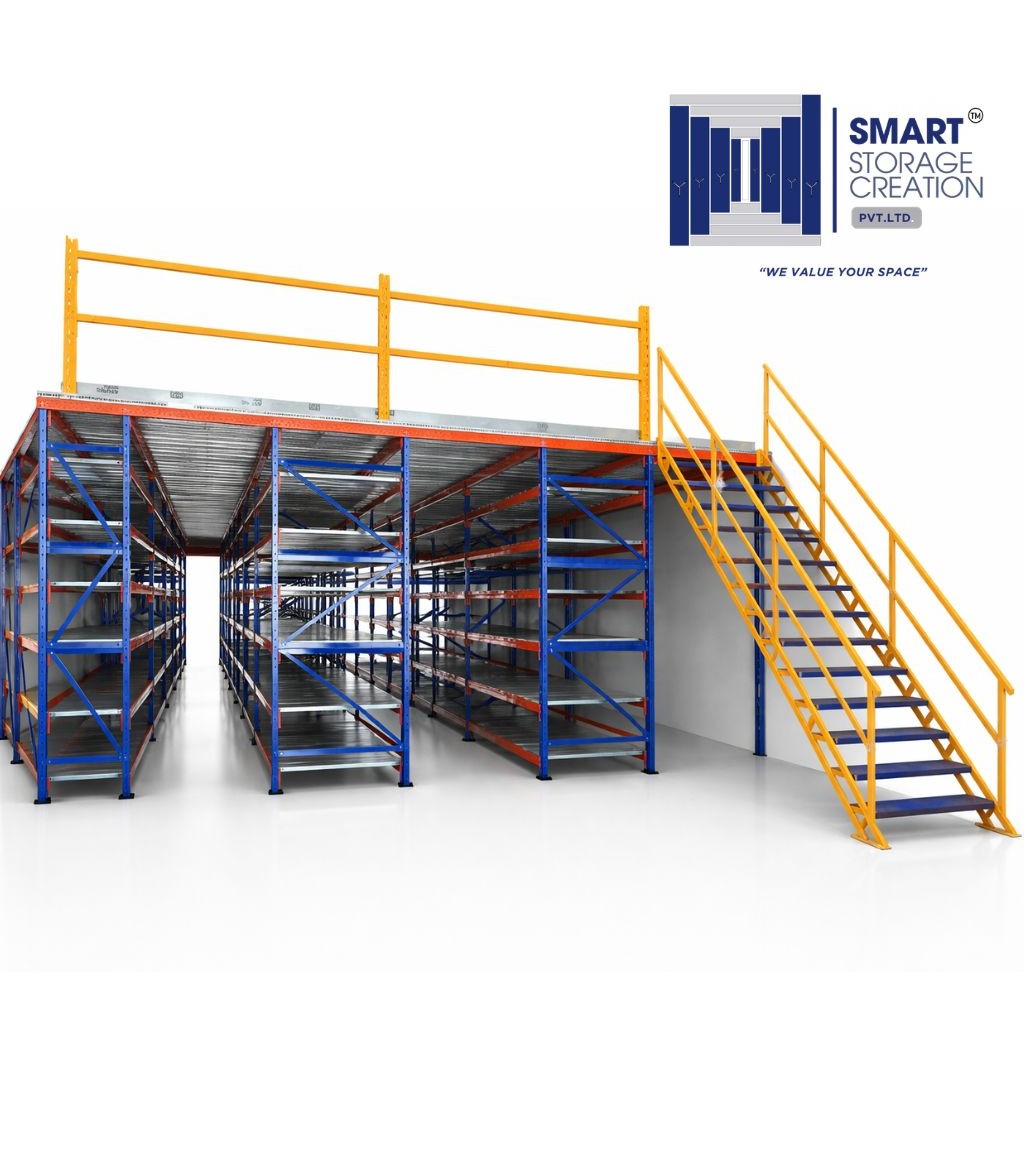
5. Add a Mezzanine Floor
A mezzanine floor creates a second (or third) usable level inside your existing building — for storage, packing, light assembly or offices. It's one of the most powerful ways to add floor area without construction, and it's usually far cheaper over time than renting extra space. See our analysis of mezzanine floor vs. renting warehouse space.
For very tall buildings, a multi-tier mezzanine floor stacks two or more levels, each accessible by its own staircase.
6. Use Two Tier Racks for Hand-Picked Goods
If your inventory is picked by hand — spare parts, cartons, components — a two tier rack adds a second storage level with a walkway, roughly doubling storage in the same footprint without a full mezzanine. Read our complete guide to two tier racks.
7. Compact Records and Small Parts with Mobile Compactors
Warehouses often have an office, document room or spare parts store that has grown out of control. A mobile compactor removes fixed aisles and typically recovers 40–70% of the floor space that fixed shelving would need for the same volume.
8. Store Long Items on Cantilever Racks
Pipes, rods, steel sections and timber stored on the floor or in pallet racking waste a surprising amount of space. A cantilever rack stores long items vertically in organised levels, freeing up floor area and making handling safer.
9. Re-Slot Inventory with ABC Analysis
Classify SKUs by how often they move: A items (fast movers), B items (medium) and C items (slow movers). Put A items in the most accessible locations near dispatch, and move C items to higher levels, deeper positions or denser storage. Re-slotting doesn't add positions, but it lets you use high-density storage for slow movers without slowing down picking.
10. Clear Dead and Obsolete Stock
Expired, damaged, obsolete and excess stock is one of the biggest hidden space users. A quarterly review to dispose of, return or relocate dead stock often frees up capacity at almost no cost.
11. Match Shelf Type to Load Type
Small cartons sitting on full pallet positions waste space. Use slotted angle racks or sectional panel racks for small, light items and reserve pallet positions for pallets. Our comparison of slotted angle racks vs. heavy duty racks helps you match the system to the load.
12. Plan Receiving and Dispatch Areas Better
Staging areas tend to expand to fill whatever space is available. Define clear zones for receiving, quality check and dispatch, size them for your real daily volume, and avoid using them as long-term storage.
Which Method Gives the Biggest Gain?
- Quick, low-cost wins — clear dead stock, right-size beam levels, re-slot with ABC analysis
- Medium investment — taller racking, narrower aisles, compactors for records and small parts
- Structural capacity gains — high-density pallet racking, two tier racks, mezzanine floors
The best results usually come from combining methods. For example, re-slotting slow movers into double-deep racking while adding a mezzanine for packing can free up space on the main floor for faster-moving stock.
Safety First: Don't Trade Capacity for Risk
- Never exceed the rated capacity of beams, frames or mezzanine decks
- Re-verify load ratings after any change to beam levels, height or bay width
- Keep aisles wide enough for safe forklift operation
- Maintain fire-safety clearances below sprinklers and around exits
- Fit column guards and end-of-aisle protection in forklift areas
Get a Free Warehouse Capacity Assessment
Smart Storage Creation has been designing and manufacturing warehouse storage systems since 2005 from our ISO 9001, ISO 14001 and ISO 45001 certified facility in Vasai, Maharashtra. We help warehouses across Mumbai, Maharashtra and Pan-India find hidden capacity — with racking, mezzanine floors, two tier racks, compactors and cantilever systems engineered for their building.
Share your layout, building height and inventory profile, and our team will recommend practical ways to increase capacity in your existing space. If you're near our factory, see our page for warehouse racking in Vasai and Palghar, or contact us to book a site assessment.
Frequently Asked Questions (FAQ)
Conclusion
You can usually increase warehouse storage capacity significantly without moving — by using vertical height, tightening aisles, choosing denser racking and adding levels with mezzanines or two tier racks.
Start with measurement and quick wins like dead stock removal and beam re-sizing, then invest in structural solutions where the numbers justify it — always with load ratings re-verified.
Smart Storage Creation helps warehouses across India unlock hidden capacity with engineered storage systems and a free site assessment to show you where the space really is.